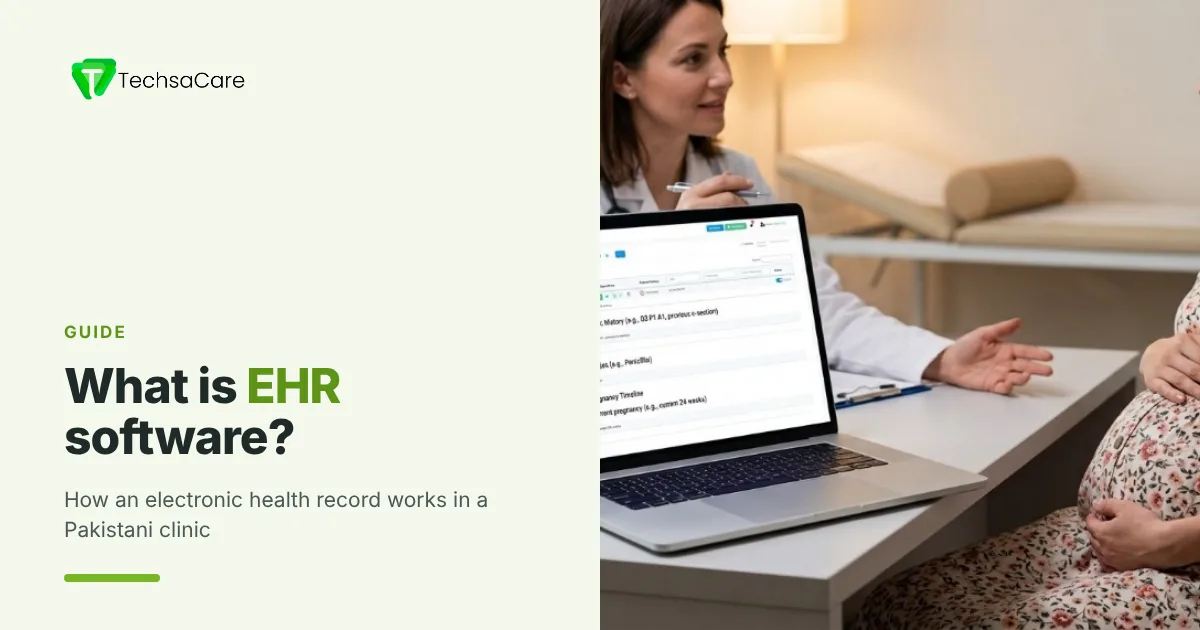
EHR stands for electronic health record: a patient's complete medical record, kept digitally and shared by everyone involved in their care. EHR software is the system a clinic or hospital uses to create, update and share that record.
That sounds simple, but it changes how a clinic runs. Below is what an EHR actually does, how it works step by step in a typical Pakistani clinic, and what to check before buying one.
What's in an electronic health record?
- Patient details: name, phone, CNIC or MR number, age, allergies.
- History: past visits, diagnoses, chronic conditions, surgeries.
- Visit notes and vitals: BP, pulse, temperature, weight, and the doctor's notes.
- Prescriptions: every medicine prescribed, with dose and duration.
- Lab and imaging: test orders and results, ultrasound and X-ray reports.
- Billing: consultations, procedures, tests and medicines charged.
- Follow-ups: when the patient should come back, and whether they did.
How EHR software works: one patient's visit
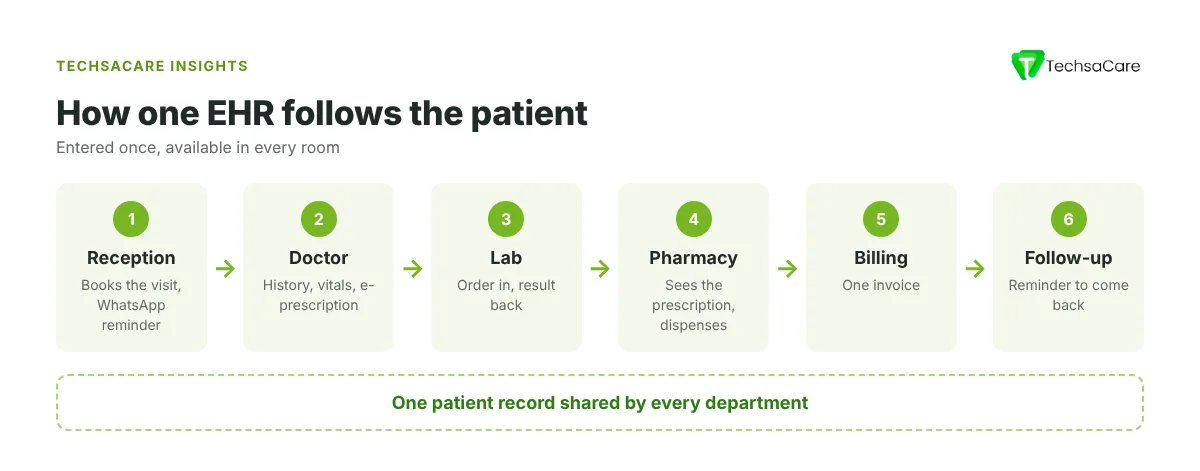
- Reception books the appointment, or adds a walk-in to the queue. The patient gets a WhatsApp reminder before the visit.
- The doctor opens one screen with the patient's full history, records vitals and notes, and writes an e-prescription.
- The lab receives the test order electronically, processes the sample and posts the result back to the same record.
- The pharmacy sees the prescription without retyping it, dispenses and updates stock.
- Billing charges for everything in one invoice.
- Follow-up: the system reminds the patient when to come back.
Nothing is retyped, nothing is lost between rooms, and the next doctor who sees the patient has the full picture.
EHR vs EMR
An EMR (electronic medical record) is one practice's digital chart. An EHR is built to be shared across departments and providers, such as lab, pharmacy, radiology and referrals. Every EHR includes an EMR. Read the full EHR vs EMR comparison →
What changes for a Pakistani clinic
- Fewer no-shows. WhatsApp reminders reach patients who ignore SMS.
- Readable prescriptions. No handwriting errors at the pharmacy counter.
- Faster OPD. History is on screen, not in a file someone has to find.
- Stock you can trust. Pharmacy sales update inventory automatically, with low-stock alerts.
- Month-end in minutes. Daily and monthly income by doctor, department or service.
Cloud or installed?
Most modern EHRs, including TechsaCare EHR, are web-based: they run in a browser, with nothing to install, and records are reachable from any branch. Ask any vendor how backups work and what happens if your internet goes down.
What does EHR software cost in Pakistan?
Published prices range from about Rs 1,200 to PKR 5,500 a month for clinics. TechsaCare EHR starts from PKR 3,000 a month in Pakistan. See our clinic software price guide.
Where TechsaCare EHR fits
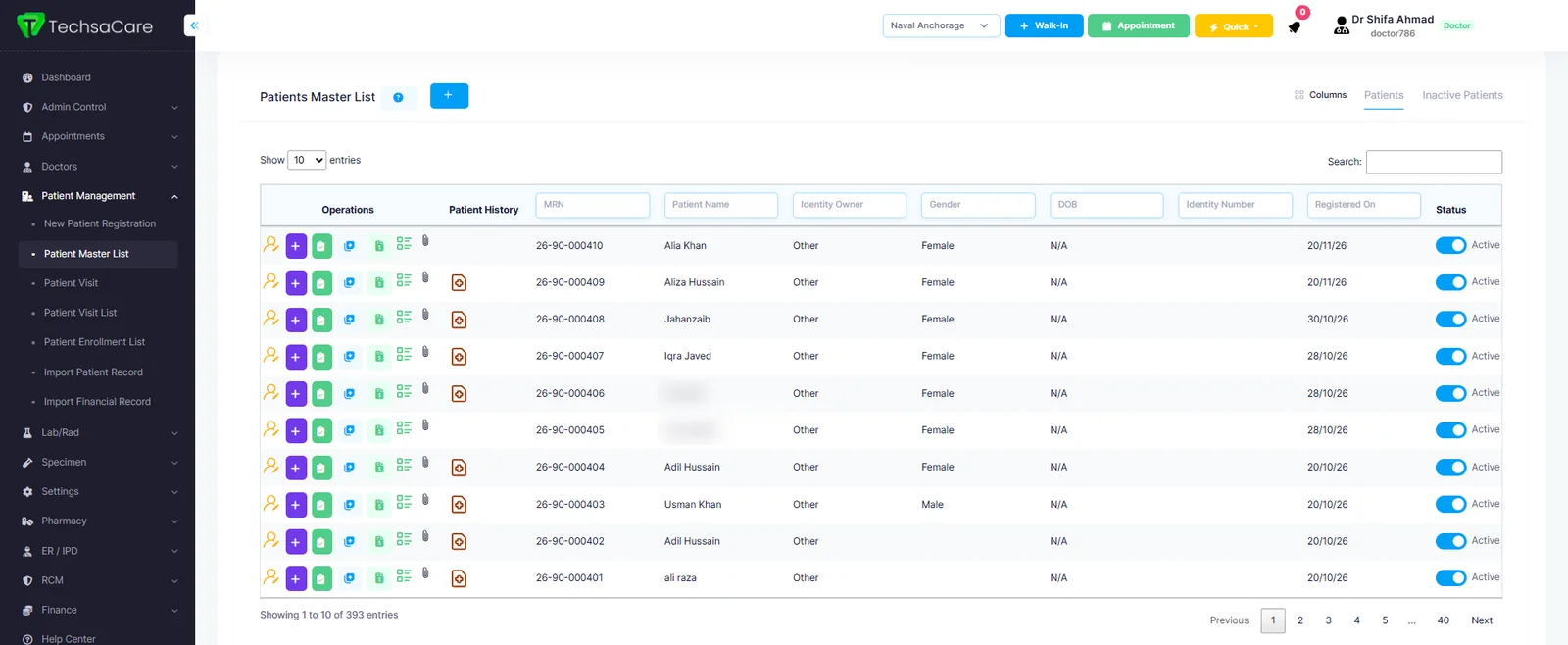
TechsaCare EHR is a web-based EHR and hospital management system built in Islamabad. Appointments, patient records, e-prescriptions, pharmacy, lab, radiology and billing work on one record, with WhatsApp reminders and specialty workflows for gynae, dental, physio, pediatrics and dermatology. See TechsaCare EHR →
FAQ
What does EHR stand for? Electronic health record.
What is EHR software used for? To create, update and share a patient's medical record across reception, doctors, lab, pharmacy and billing, so information is entered once and available wherever it's needed.
Is EHR software only for hospitals? No. Single-doctor clinics use EHR software too. The benefit grows as you add doctors, a pharmacy or a lab.
Do I need internet for EHR software? Web-based EHRs need an internet connection. Ask the vendor how it handles outages and backups.